Island Retreat (EEG Meditation game)
Project Brief
Our task was to investigate what is happening on the cutting edge of our chosen technology. We were required to predict where our chosen technology may be going, be able to suggest new and innovative ways that our technology could potentially be used, and design a prototype to demonstrate our concept. We must convince people that our idea is viable, useful and well-conceived. This project will be further developed in semester two.
The Goal
My goal was to create a mediation game that was linked with an EEG scanner, this means that your brainwaves can be a part of the game. This will allow people to learn meditative techniques in a fun and interactive way.
Tools
Arduino, Unity, Adobe Illustrator, Adobe After Effects
View my full design process: Island Retreat Design Document
Inital sketches
Storyboarding the concept
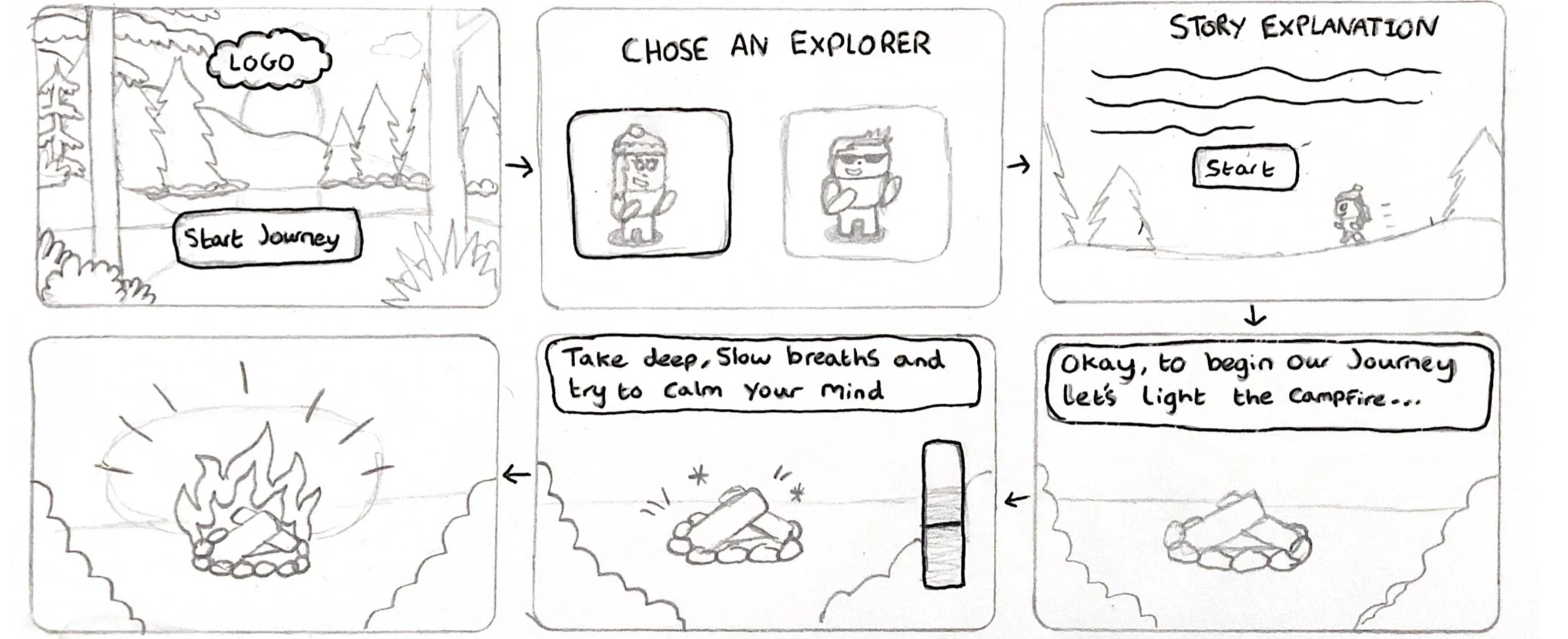
To start off the journey of this project, I sketched out a storyboard for the general concept idea that I had. Previously I had researched numerous different gaming styles and found that ‘story’ style games fit my idea perfectly.
The game concept would be a ‘story game’ that takes you on a meditation journey, each scene of the game would have a guided mediation challenge/mini-game task for you to complete. If your brain activity lowers enough and you pass that meditation challenge, then you can progress to the next scene of the game.
Research
Gathering concept feedback
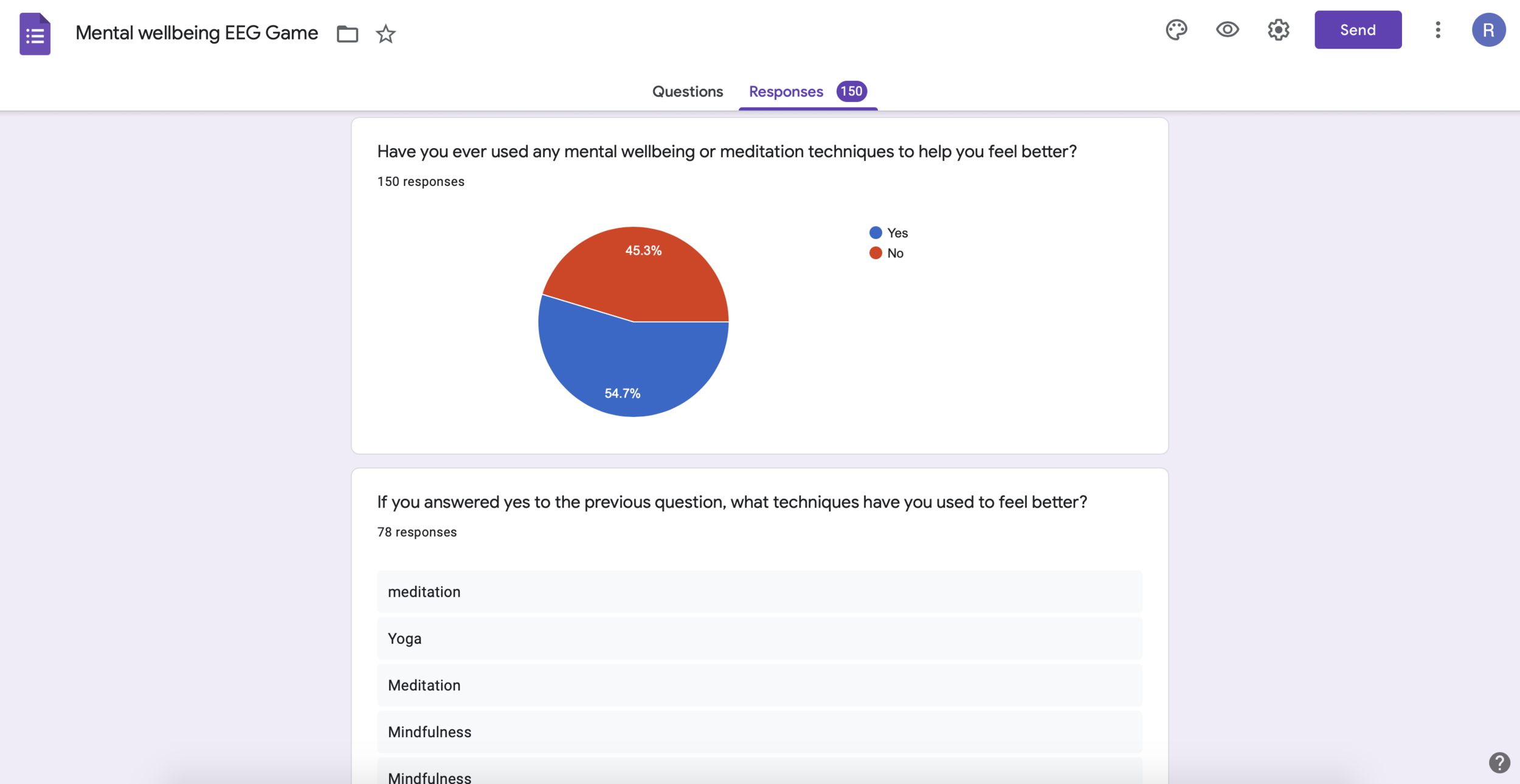
Once I had my concept and had conducted some secondary research (this can be seen in my full design document linked at the top of this page), I wanted to create a survey that asked specific questions that could help me develop my idea as well as my possible target audience.
The specific areas I wanted to cover are peoples mental health, mindfulness techniques, experience with EEG scanners, willingness to use an EEG scanner, relaxing game preferences and an opinion on my potential game theme.
After sharing my survey on Facebook, survey sharing websites and Reddit forums I was able to gather 150 responses.
Affinity mapping the results
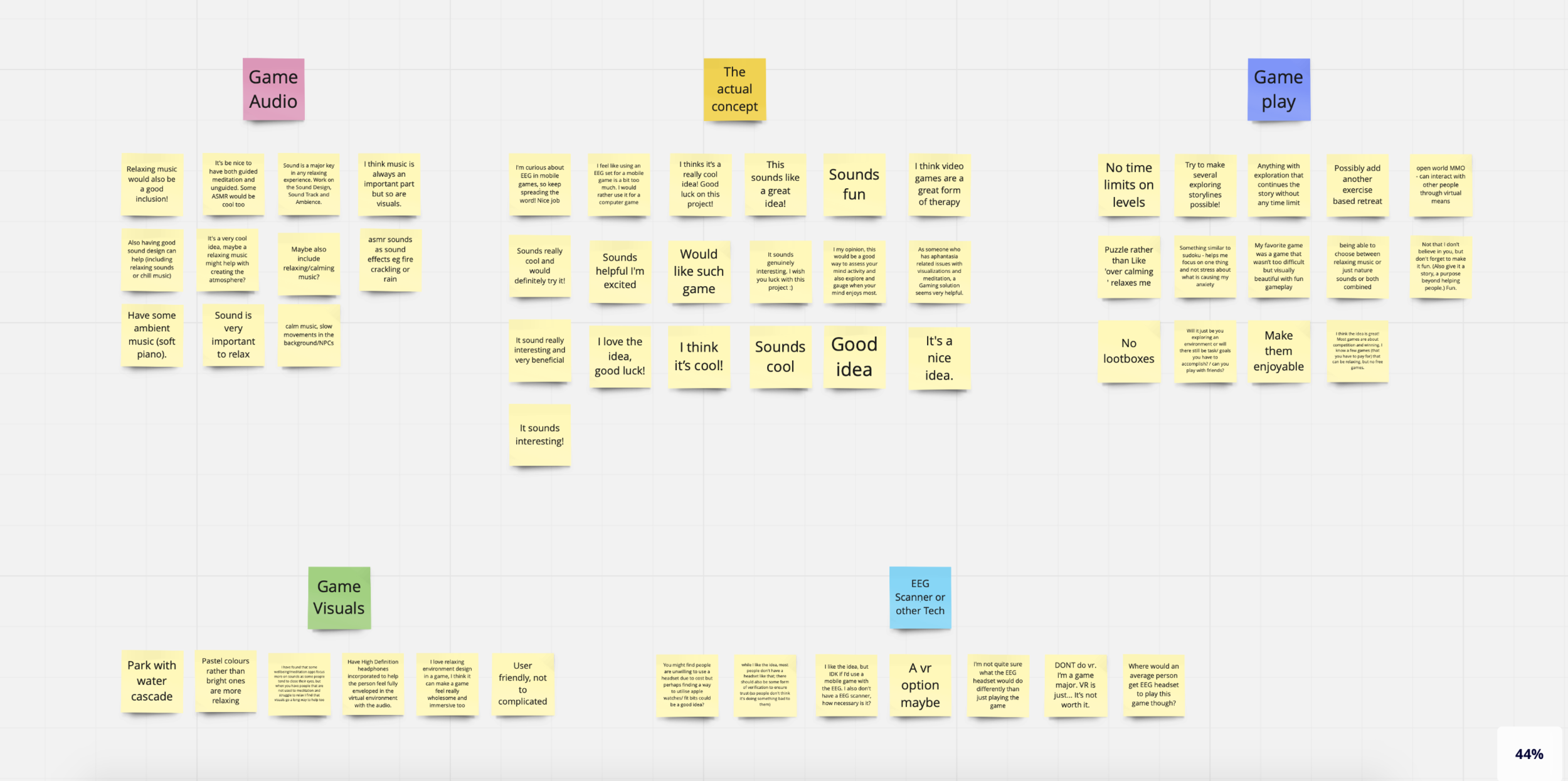
To make the most out of all the fantastic feedback I was given, I made an Affinity Map and grouped them into common themes. That way when I’m deciding key elements of my concept (like what visuals to include) I can quickly scan the affinity mapping notes.
Some important research points that came up are:
13 people mentioned that they would prefer a desktop game to a mobile game.
It would be good to have a toggle so you can decide on guided mediation vs unguided mediation.
Having a storyline that would make it fun as well as helpful.
The game themes that people liked the best were vacation at a tropical resort/exploring a secret garden.
Based on this research I decided to make the game theme a mix of the most popular responses, which will be exploring a tropical island. I will also be creating the game for desktop, and include a fun storyline with plenty of calming sound effects.
Creating user personas
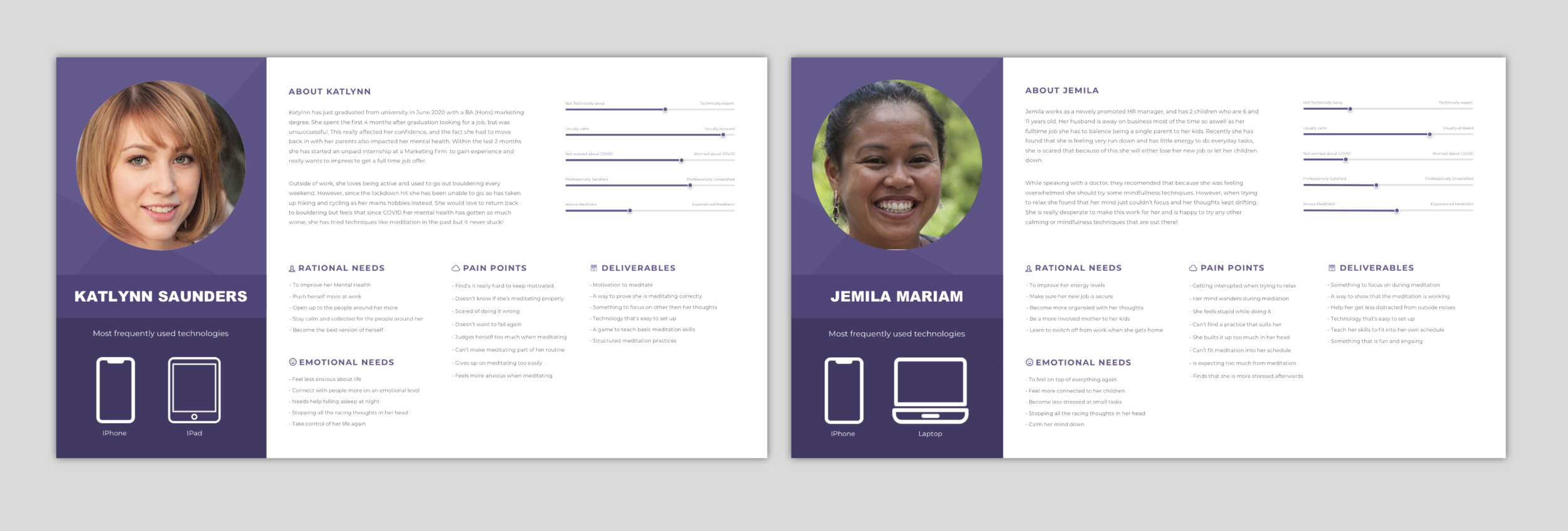
From all of the research, I decided that my target audience would be novice meditators and those new to mindfulness. I now needed to create some user personas based on this archetype and based on the responses that I received on my survey. The two examples below show different needs that I have found in research.
My first User Persona is related to the research I’ve found where people can’t focus or find it hard to know if they are meditating properly. This is the persona I will focus on to try to address that problem.
My second User Persona is related to the research I’ve found where people want to learn the basic skills or find it hard to make time for meditation. This is the persona I will focus on to try to address that problem.
Ideation
Creating a User Journey and Storyline
As I have chosen a story game and now have a theme, it’s time to create a storyline for why the user is on the mysterious tropical island. I’ve gone back and forth about the reason they would be on the island and created scenarios such as ‘being washed up’ or ‘coming across it on an expedition. However, all of these reasons could be quite stressful and counteract the relaxing quality I’m going for with this game.
In the end, I have chosen to make the reason they are on an island because of a dream. This is mainly because it is the least anxiety-inducing out of all of the options and could also promote the user being in a dreamlike state. The story introduction will be:
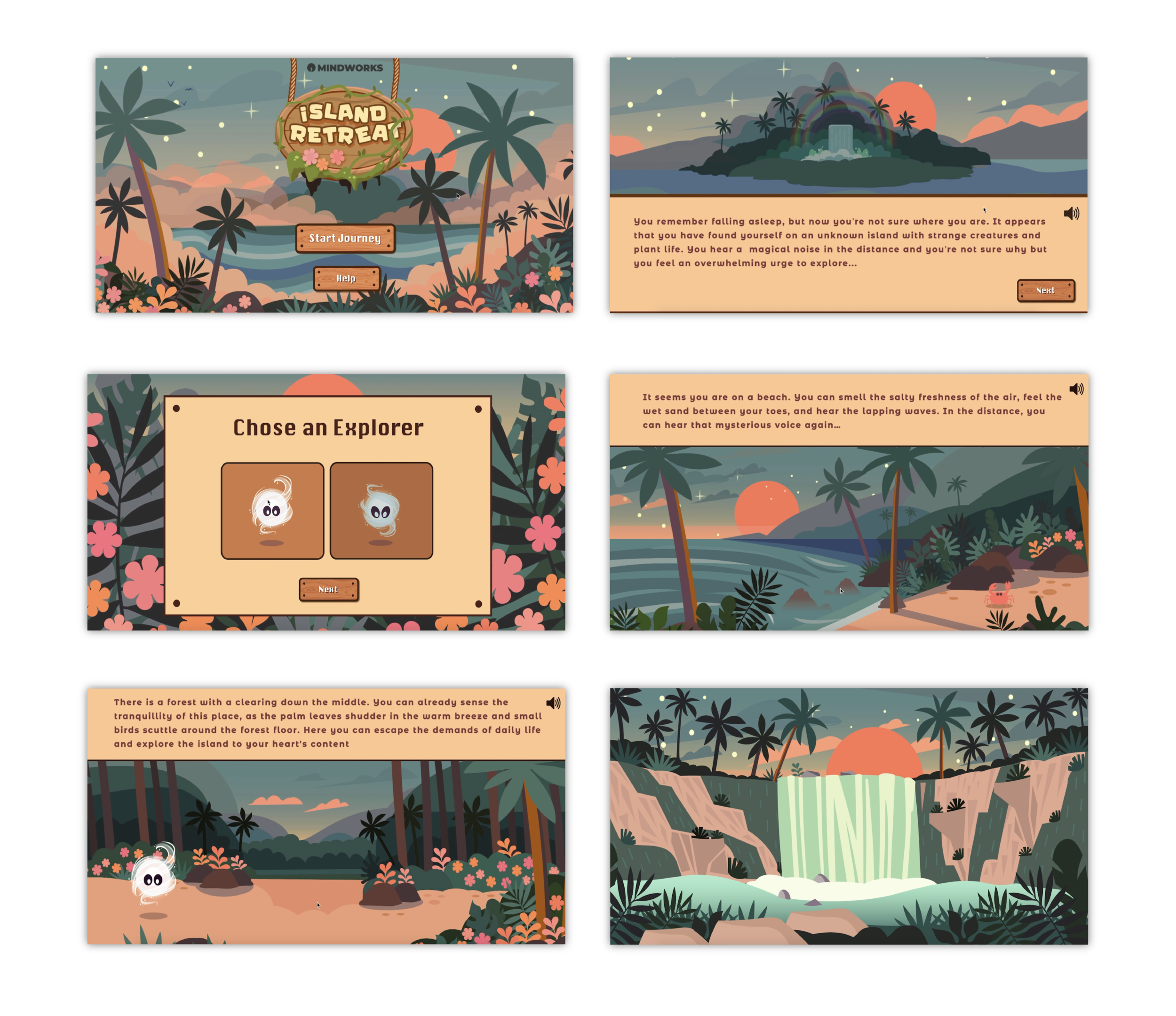
“You remember falling asleep, but now you’re not sure where you are. It appears that you have found yourself on a mysterious island with strange creatures and plant life. You hear a magical noise in the distance and you’re not sure why but you feel an overwhelming urge to explore, and discover what might be on this intriguing island...”
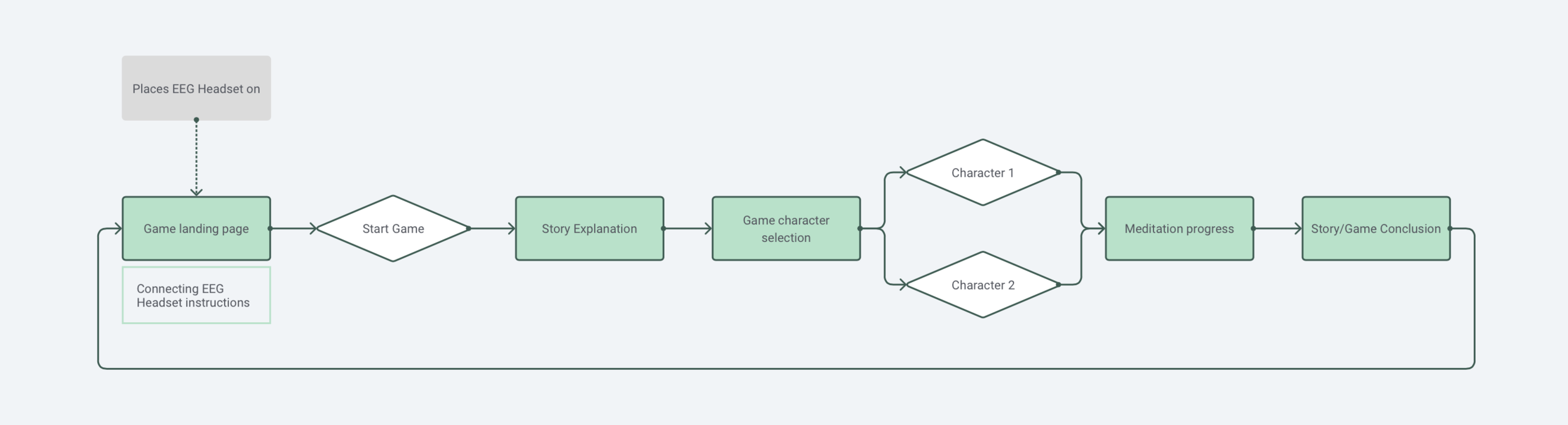
Below shows the user journey that I created and will base my games development on.
Selecting a game colour palette
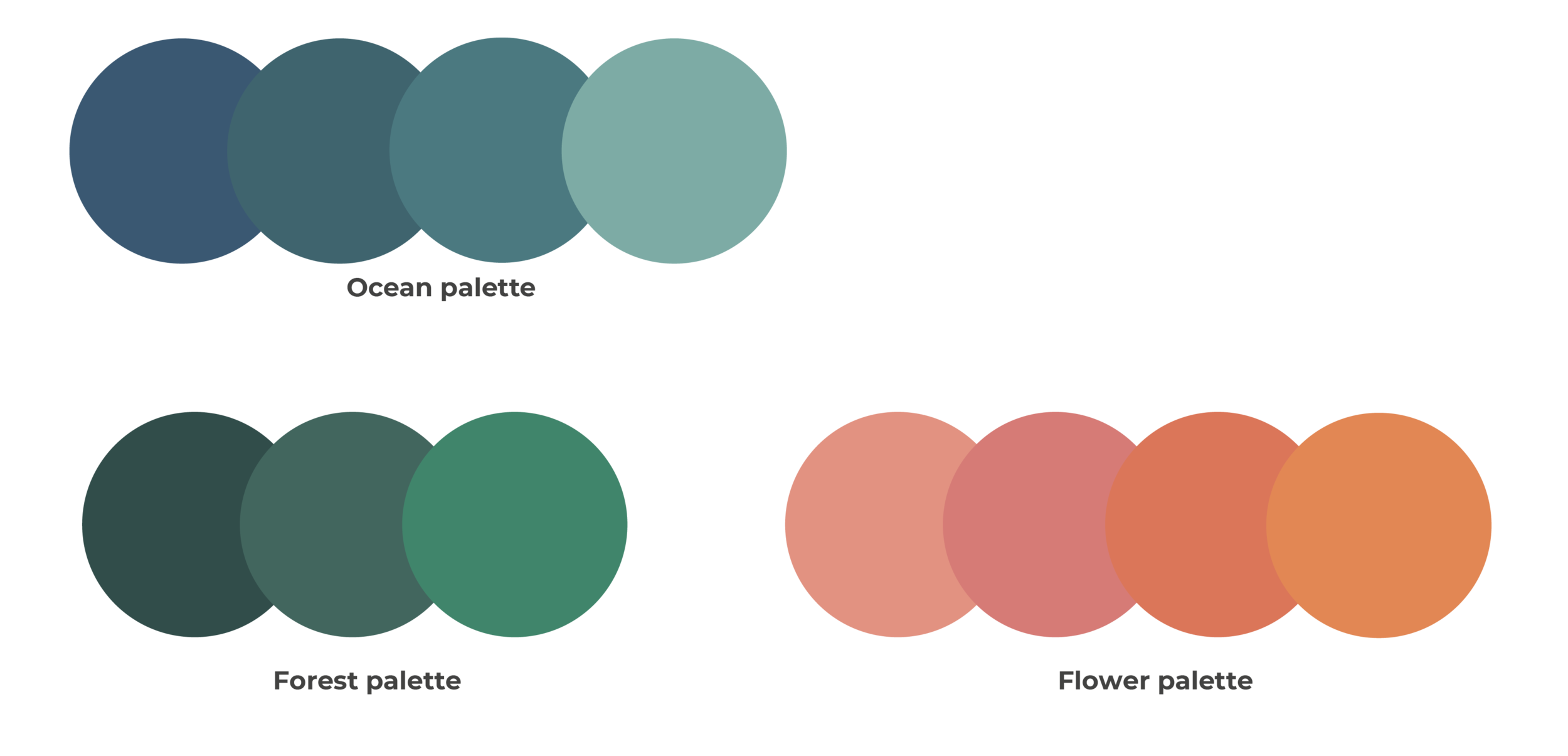
It was now time to start developing a colour palette for the game, as this is a meditation themed game the colours need to not be too vibrant but I also want them to be varied. From the previous illustrations I have experimented with, I liked the tropical colour palette so I’ll be using the same style.
Finalised Storyboard
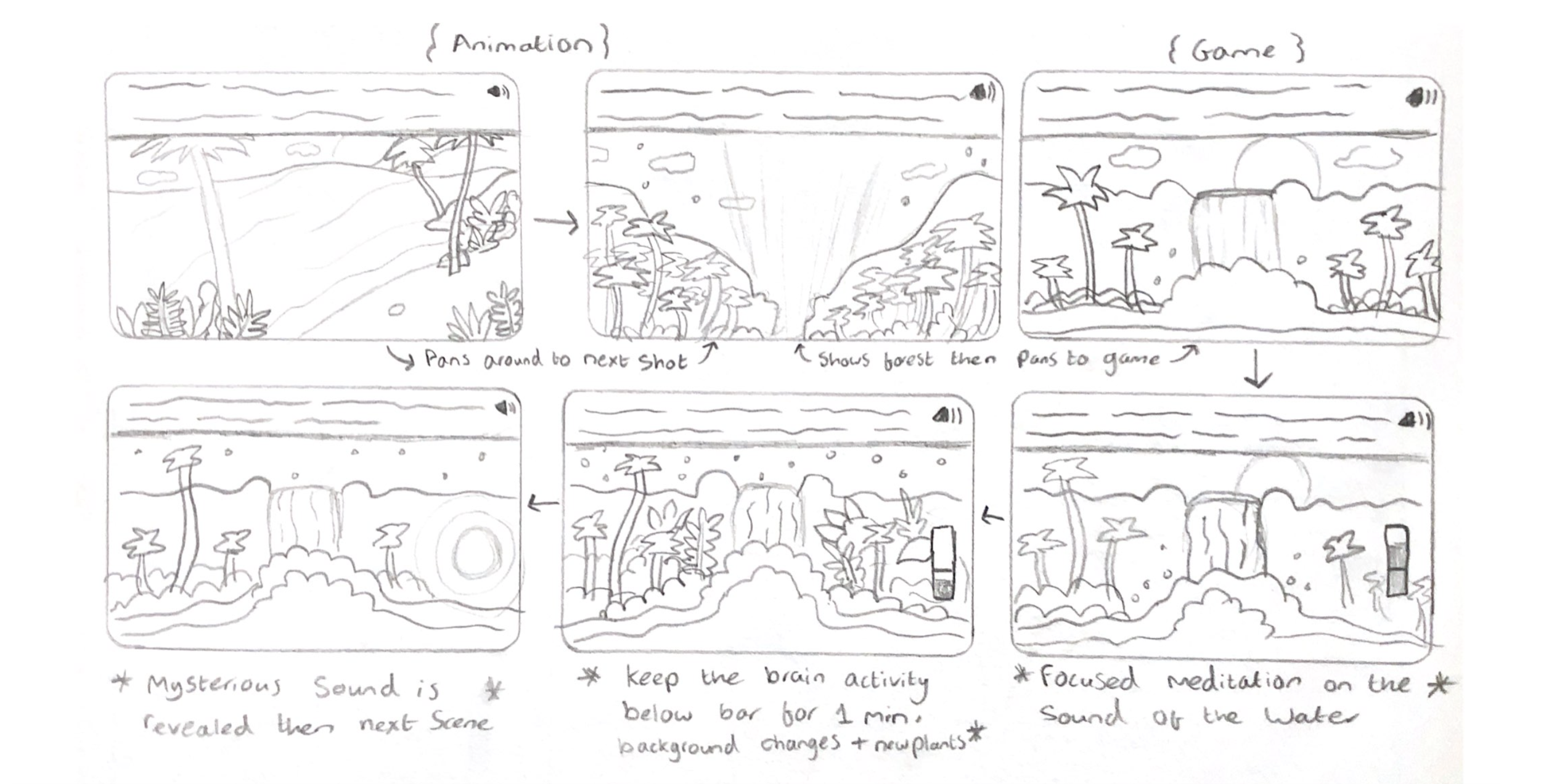
At this stage, I started to think about what each of the different scenes could look like animated. I went through and created a storyboard with annotations around what I would want to happen in each section. Below is an example for one of the sections.
Final Screens (semester one)
Finalised wireframe screens
Using the games colour scheme and storyboard, I was able to create wireframe scenes. These were created using Adobe Illustrator and could be animated using Adobe After effects, then I could add them into Unity with some buttons that link to other screens. This created a realistic game mockup that could be tested for UX improvements. The only aspect that I couldn’t test was the EEG scanner, but this would be developed in semester two.

Testing the screens
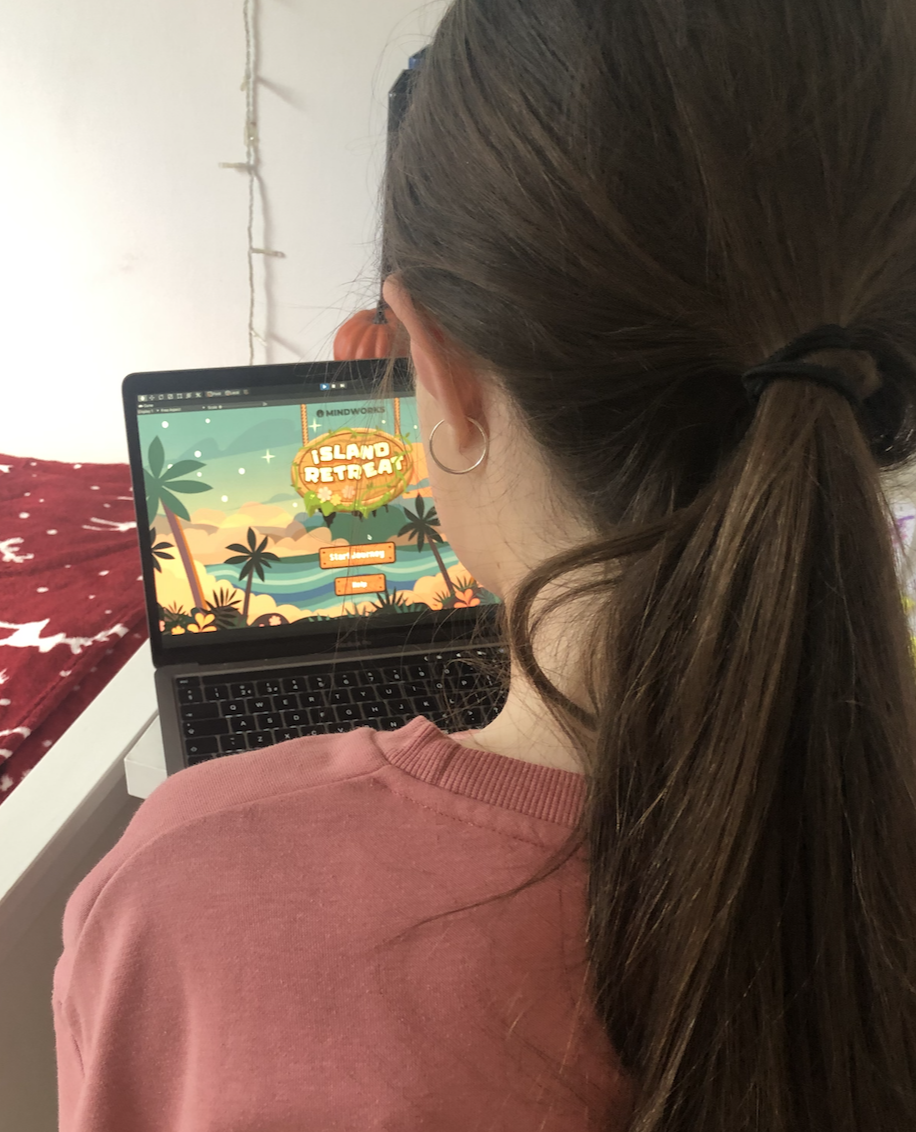
After creating the updated user flow and concept for the game, I wanted to test this with some users. I created a very basic prototype on InVision using the visual design screens shown previously, this would only work so well as it obviously wouldn’t react and act as a game but I could test out if they liked the screens/flow, and I could describe what would happen on each page.
I chose 4 users to test out the flow of the game and I was able to gain some really valuable feedback. All of the users liked the visual style of the game and thought that it fit the meditation theme well, they also liked the story of the game and could follow the screens well.
The main feedback:
More options for EEG scanner- the feedback received said that one level wasn’t enough to show how the EEG scanner would work fully.
More UX consideration - with the basic prototype, there wasn’t an option to get back to the home screen etc so this will be developed next term.
Different levels - users said that it would be nice to have more levels within the game instead of one.
Current Progress (semester two)
Hacking into and connecting up the EEG Scanner
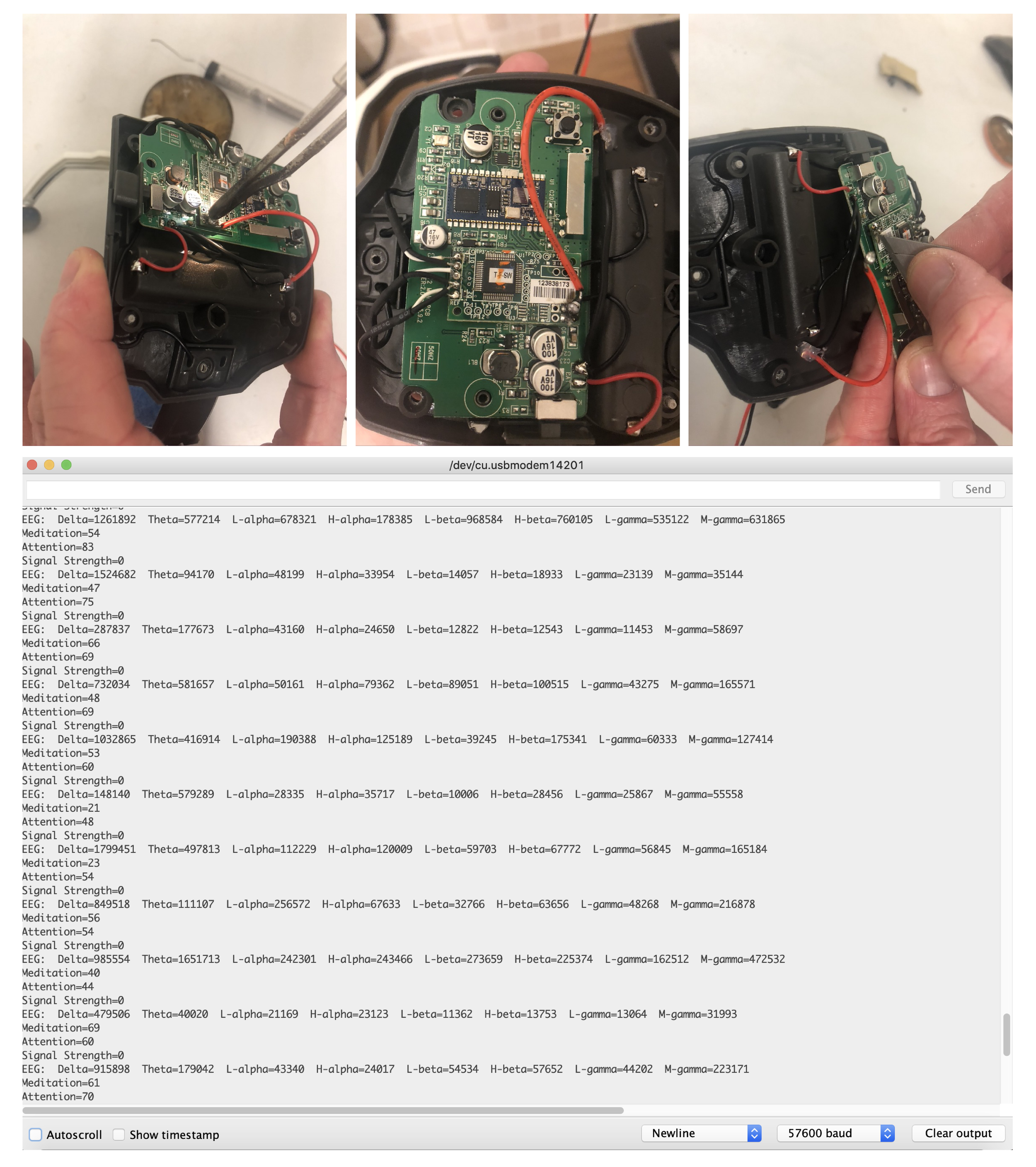
For this semesters progress, I have been able to hack into an EEG scanner and connect it to my laptop. The EEG scanner that I am using is the ‘Star Wars Force Trainer’ and was originally a toy, however, it measures brainwaves and I have been able to hack into it by soldering a wire and linking it to an Arduino. You can see on the bottom image that I am getting a reading for all of the different brainwaves, as well as the ‘meditation’ value on my laptop.
The next steps will be to link this data into my Unity level and have the brainwaves affect elements of the game itself.
Game scene development
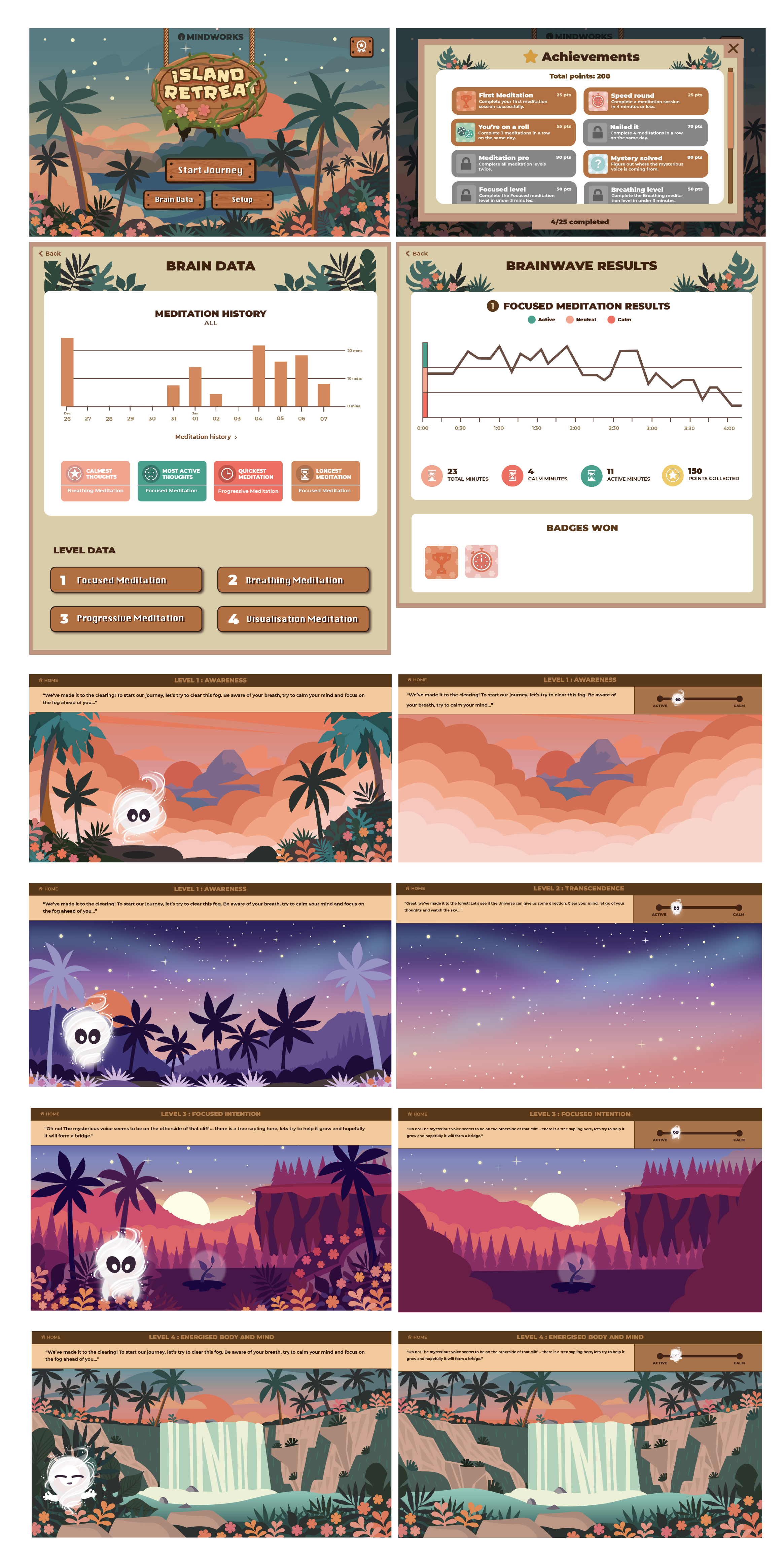
I have also made progress on the game scenes development. There are now four levels in the game (so more opportunity for the EEG scanner) and more UX considerations, with the user now having a page to track progress, their own brainwave data, save their progress and having the option to return to the homepage at any stage.
Below are a few examples of the new game screens. These will continue to be developed this semester along with the EEG scanner aspects of the game.