Curio’s website discovery
OVERVIEW
Project Brief
Curio is an American company, it provides people with virtual therapists so that they can improve their mental health. During the COVID pandemic, Curio really wanted to get their website launched ASAP so that people in isolation could benefit from their service. Our task was to design a website that both the users and the therapists could use.
The Goal
The main goal of this project for my team was to research the Curio Therapists side of the website journey. This research would then be used to design a website that could be used for guides to onboard and interact with the users.
The Team
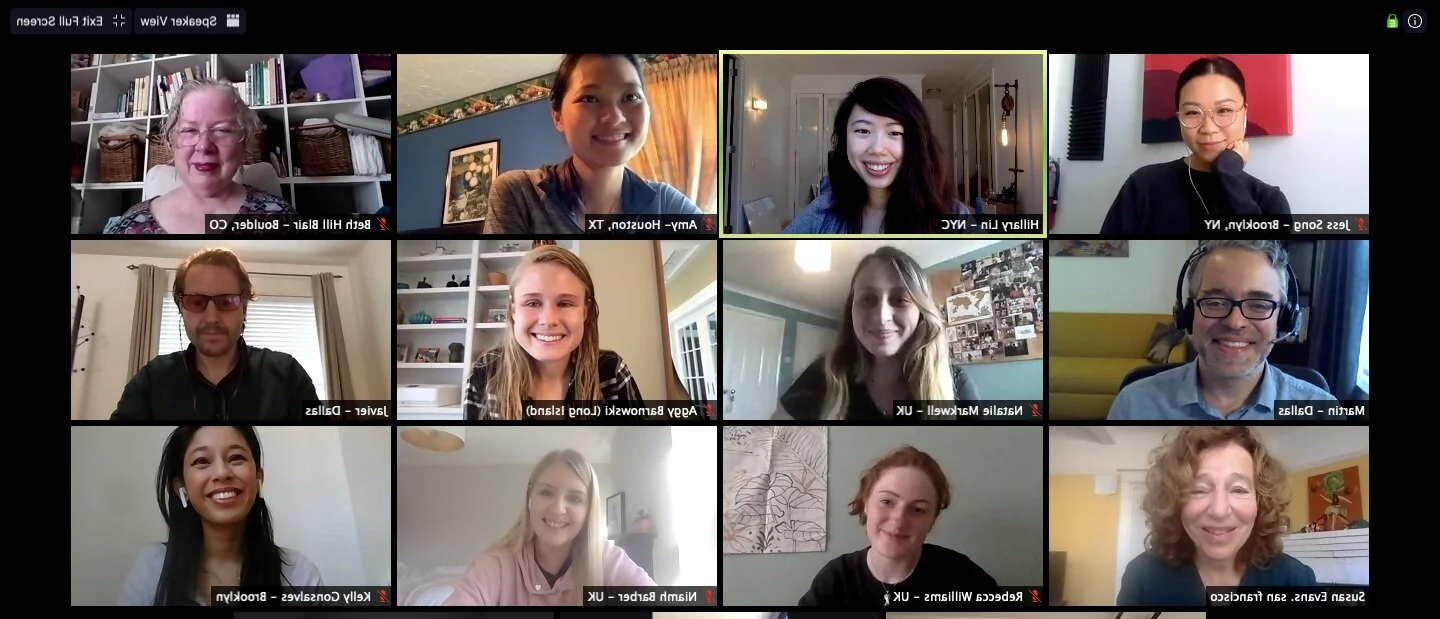
I worked in an international team and the project was completed remotely. During this project, I worked as a User Researcher in a team that was focusing on the therapist’s side of the journey.
Responsibilities
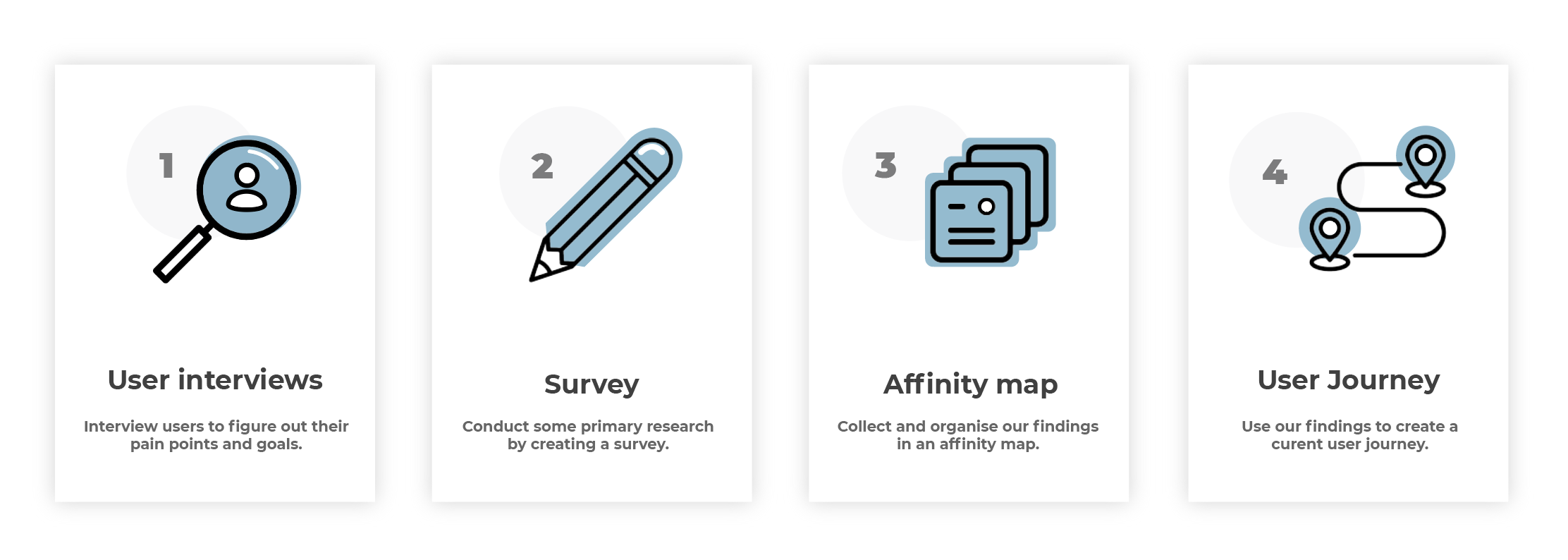
User interviews, User Personas, Interview scripting, User Journeys, Affinity Mapping
Tools
Figma, InVision, Zoom, Notion, Google Forms, Slack
The Process
My process will be different in different projects and will be determined by many factors such as the project goals, business needs, complexity of the problem, time and etc. This project was only in its concept phase when I joined, so below I’ll describe the process for tackling this project.
Discover
Understanding the product goals
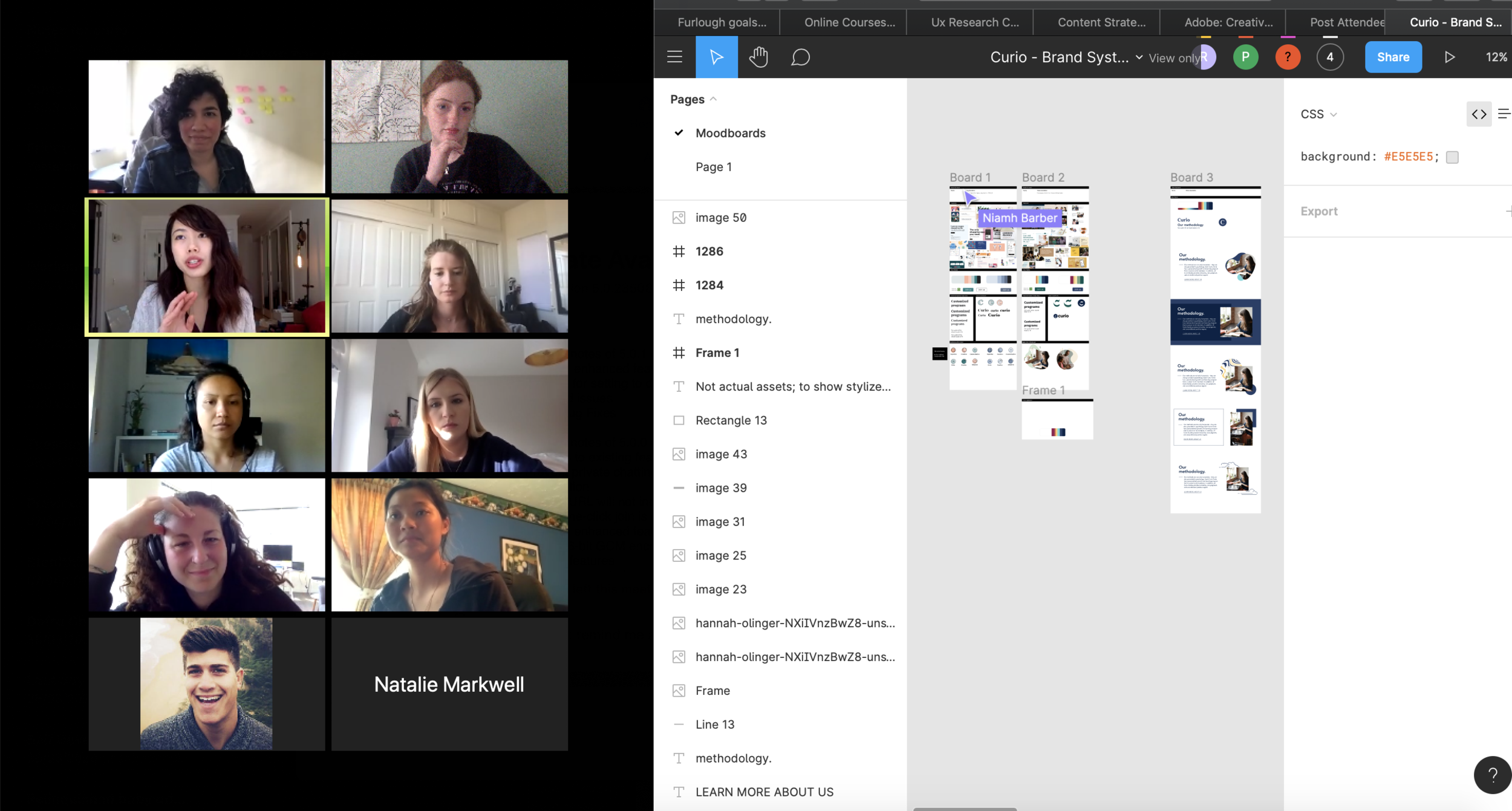
During my Onboarding of the project, I met with the design team and CEO of Curio to discuss what help I could be to their goal of getting their new website launched. As the project was very much still in its discovery phase they really needed some Researchers to start looking into certain journeys. It was here that we split into smaller UX/UR teams to take on our own tasks.
My task was to work with 2 other User Researchers on the guides section of the journey. Our goal was to fully understand the current process for onboarding guides as well as how we could improve it.
Research
DEFINING THE USER
Understanding the current guides and their User Journey
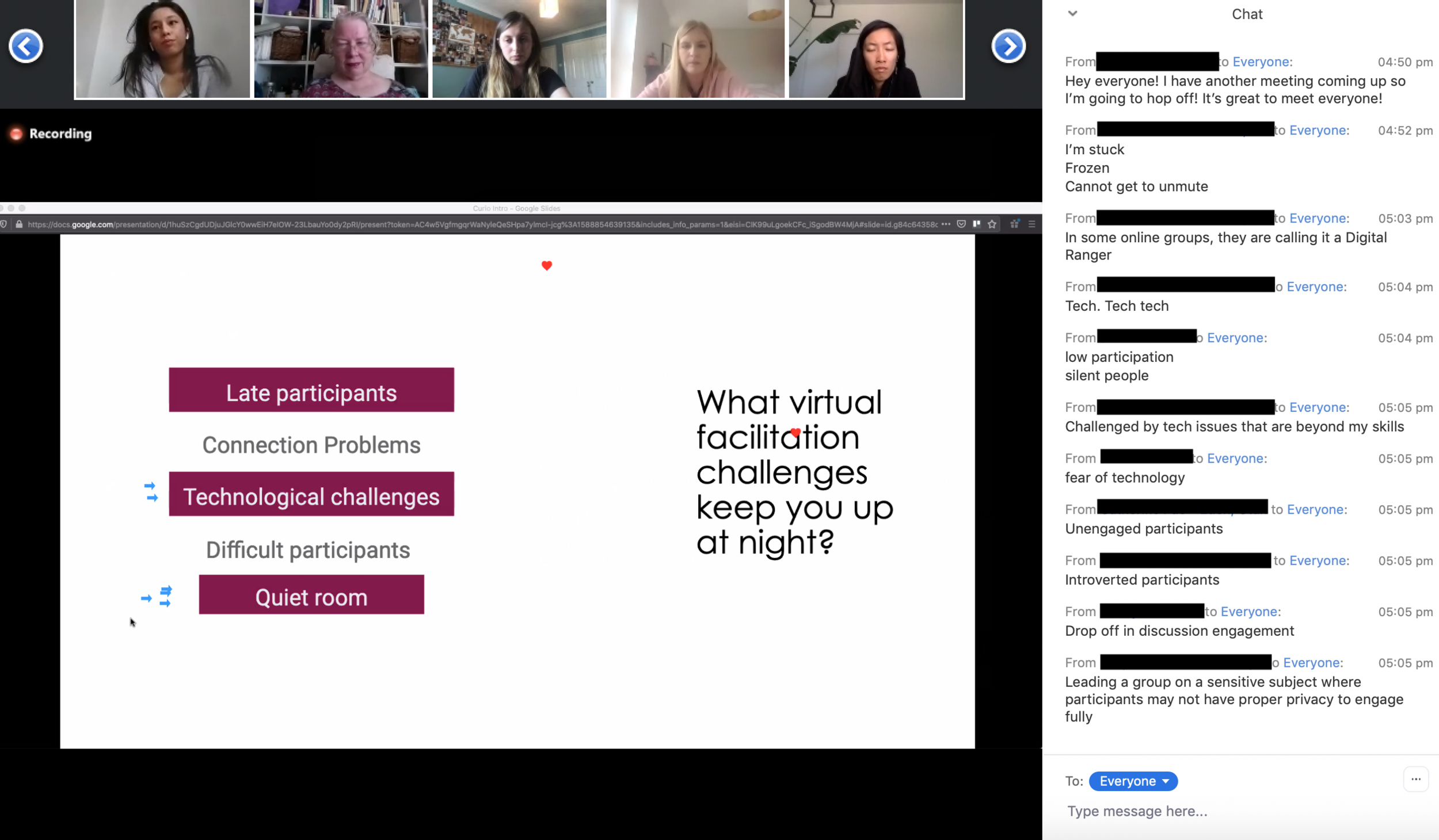
To get an understanding of who exactly the Curio guides were and what their current journey was like, I attended a virtual onboarding session for new guides. I was able to observe the whole process as well as get some insights into the different kind of ‘guides’ that would be joining Curio. This was extremely useful as it allowed me to see what their goals/fears were early on.
The current onboarding process was done entirely over Zoom, and all of the documents the ‘guides’ needed could be accessed on a Google Drive.
Conducting Primary Research
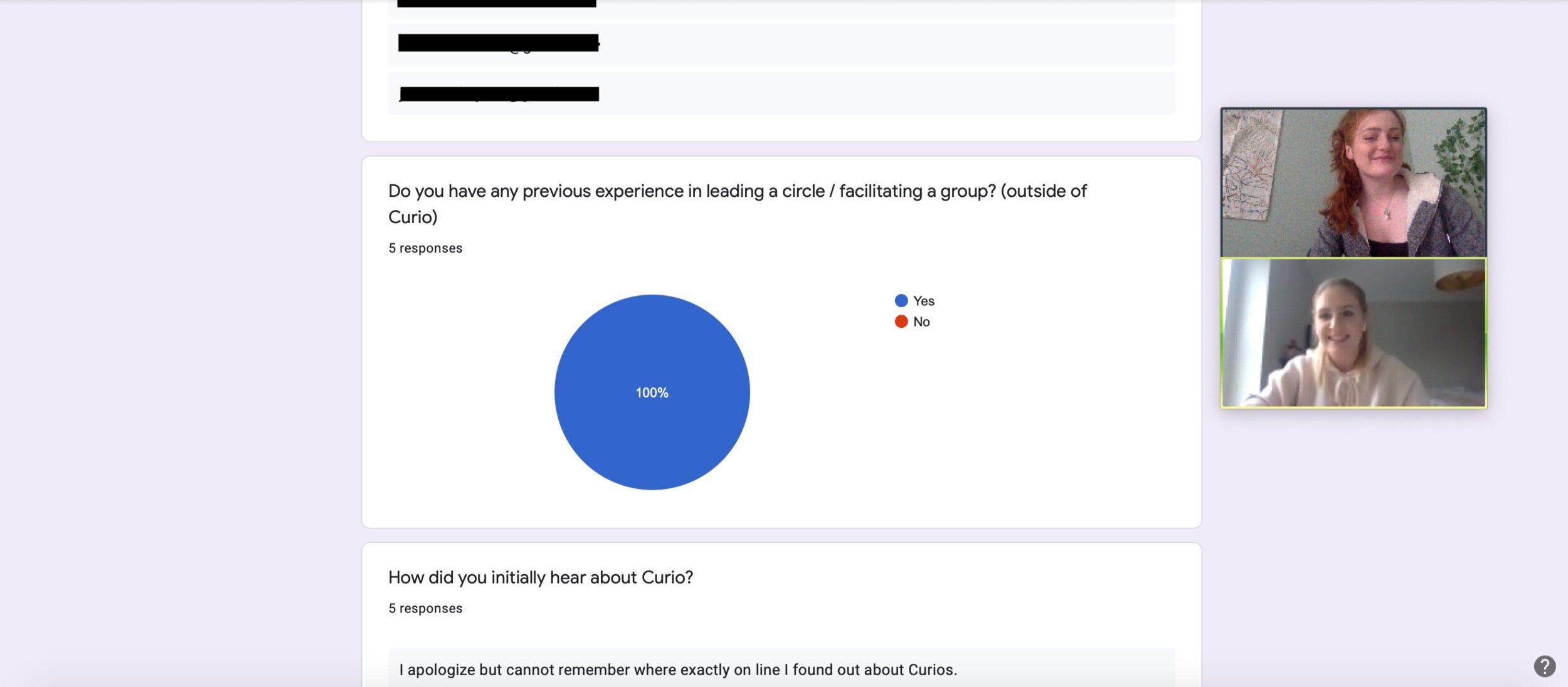
After the Onboarding session I had observed, I decided to create two different surveys that could help give the team more insights.
I created one survey that was going to be sent to current guides working in Curio, this was mainly to find out what their experience joining Curio was like as well as what they would have found useful.
The other survey was going to be sent to potential guides, this would aim to figure out what they would expect during an onboarding session.
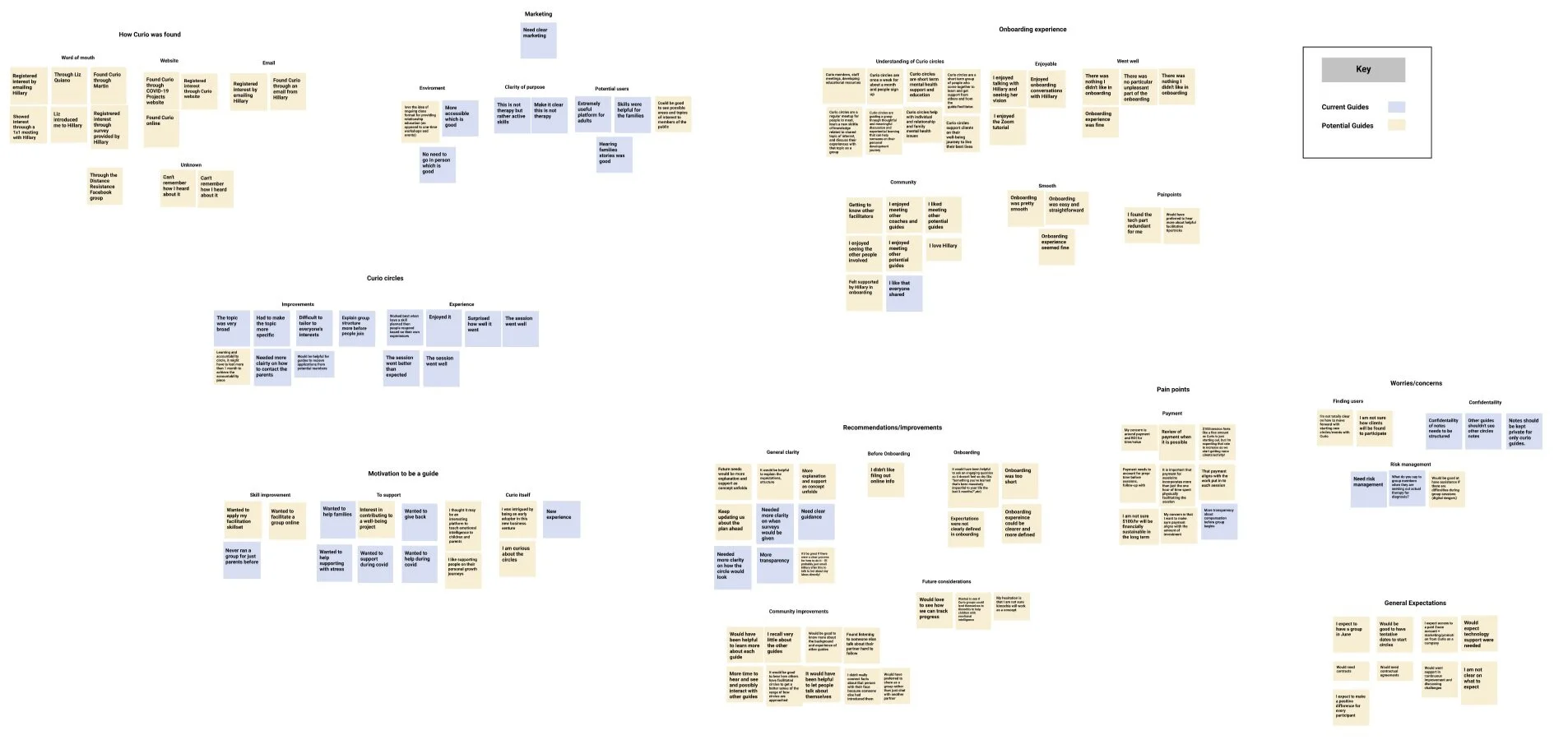
Thematic Analysis of survey results
Once we had received all of the survey findings, I created a Miroboard with all of the findings on post-it notes. We then went through them as a team and grouped them into different themes. This allowed me to visualise what areas had the most importance (most post-it notes).
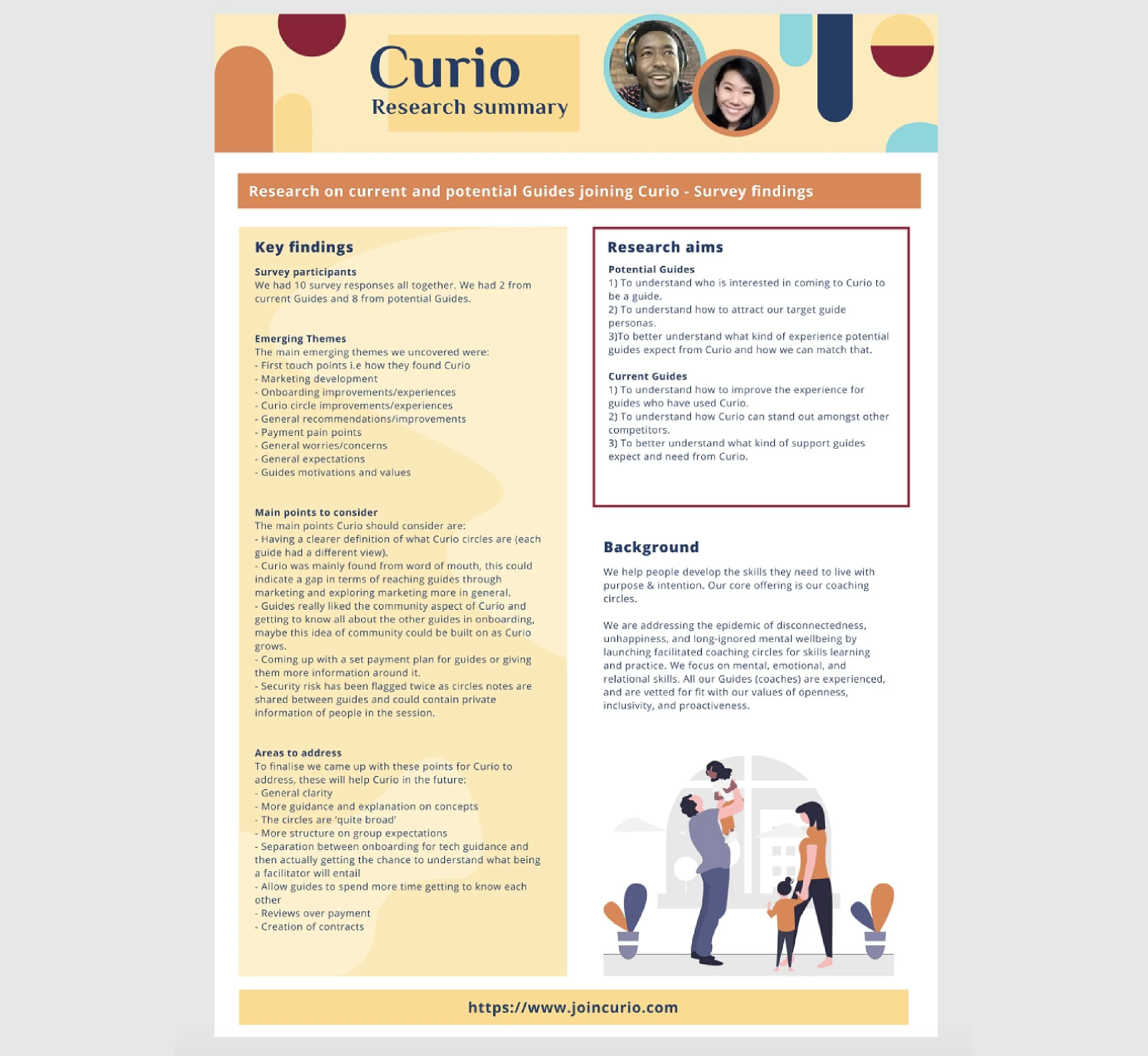
Research summary
Finally, I created a research summary that could be shared with the rest of the design team and business. This summarised the whole study around Curio Guides and allowed people with little knowledge of the project to understand the next steps that needed to be taken following on from this.
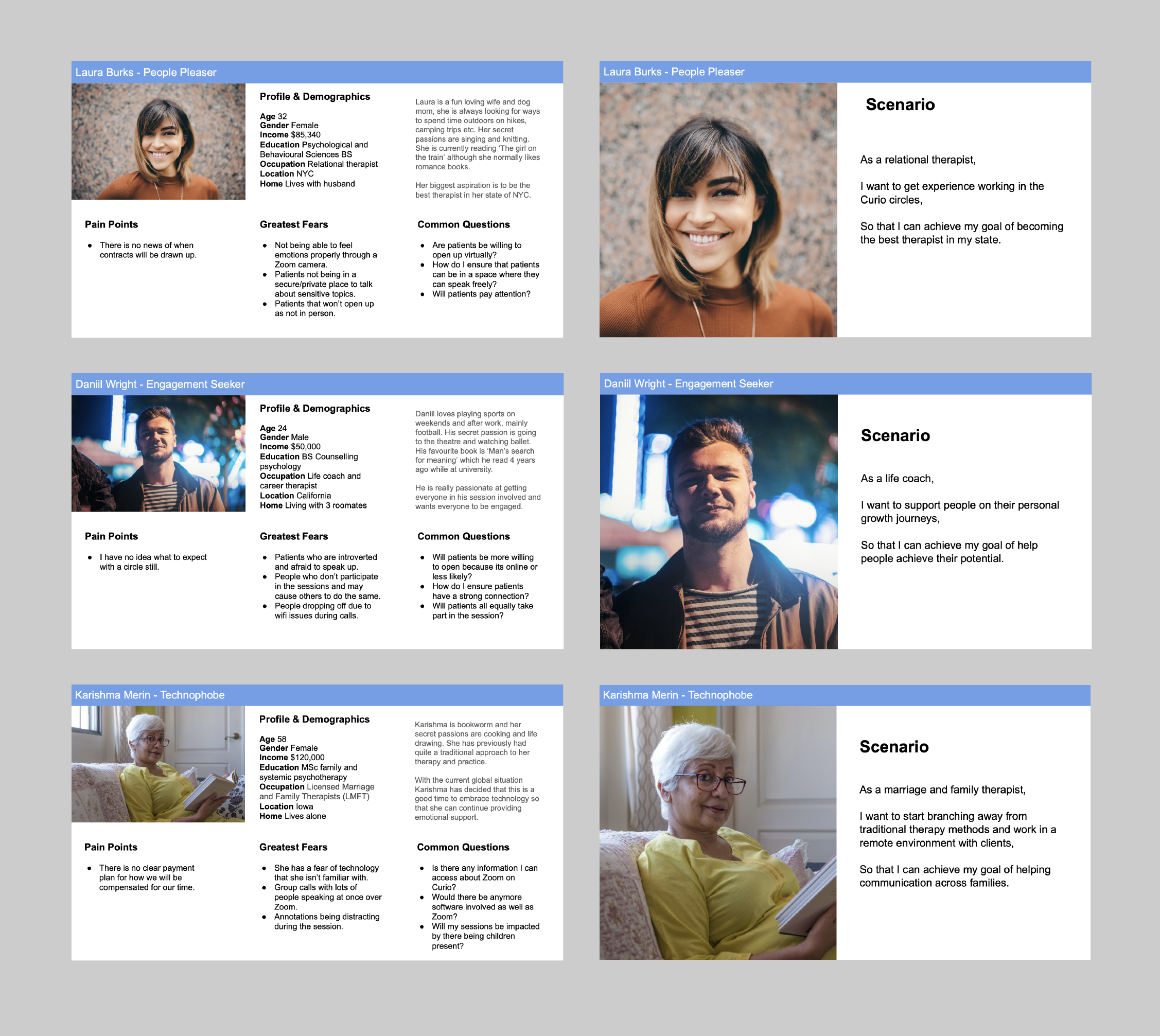
Creating research-based User Personas
Using the amazing insights from the onboarding session and surveys, I was able to accurately create some User Personas which reflected their real fears/goals. This tool was useful as we could look back at the personas and make sure we were designing a service that was user-centred and targeted towards our user group, not just based on our own opinions.
Below are some examples of the Personas and Scenarios that I created.
Final Recommendations
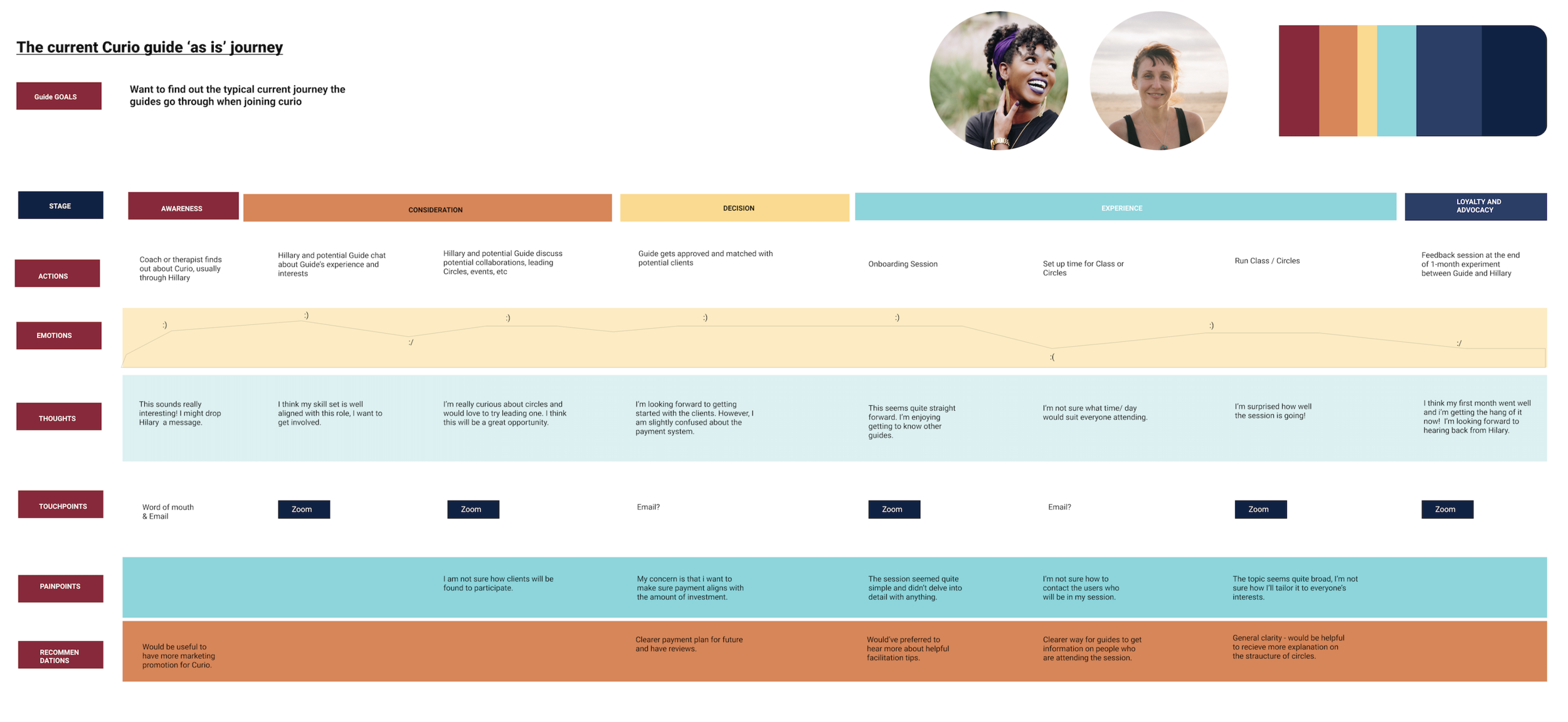
The current ‘as is’ guides journey
After our deep dive into what a Guide is and how they currently join Curio, I was able to create an ‘as is’ user journey. This was shared with the team and allowed a visual representation of how the process currently works. Using this journey map it is easier to spot gaps in the process and where the designers can potentially incorporate the website into the onboarding tasks.
Our Final Recommendations
To finish our discovery into the guides onboarding process, we used all of our research collected to create a list of recommendations for Curio. These include the next steps that could potentially start to be designed or further researched.
Clear and easy process to enquire about becoming a guide.
A more robust screening process - becoming a guide should have more than one application round.
New systems in place - which could align guides schedules with upcoming circles.
Guide community - including a place on the new website design where guides could come together and interact.
Guide dashboard - include a space where all feedback can be kept and viewed on the Guides account.
Clearer payment plan for Guides.
Payments for Guides to be reviewed at certain points.
Project Learning
What I have learned from this project?
How to work in an international team. Before this project, I only had experience working with a UK based team. Working with an international team was hugely different in so many ways, for example, I had to adapt to not being able to contact colleagues straight away (time differences) or having them refer to terminology that I knew nothing about. Overall, it was a fantastic learning opportunity that I thoroughly enjoyed.
For complex UX problems research is a must. With a project like this that was so early on in its discovery, I couldn’t jump straight into UX Design and instead had to focus all of my efforts on Researching the users, which is an extremely vital step.